

The most important story in payments right now isn’t about a new entrant disrupting the space. It’s about a 27-year-old incumbent scrambling to stay relevant — and the strategic choices it’s making to survive.
PayPal is everywhere and under pressure at the same time.
With over 400 million active accounts across approximately 200 markets, it is still one of the most recognized payment brands on the planet. Yet in early 2026, its stock dropped nearly 20% in a single day, its CEO was replaced after less than two and a half years, and its core business metric — branded checkout growth — decelerated to just 1% in Q4 2025.
That is not a cyclical dip. That is a signal.
To understand what PayPal is doing, where it’s headed, and what it means for the payment ecosystem — particularly in Europe and France — we need to look past the press releases and read the actual strategic moves.
The Hard Truth: The “PayPal Button” Is No Longer a Moat
For nearly two decades, PayPal’s competitive position rested on a simple proposition: consumers trusted the PayPal button, merchants added it to not lose the sale, and the flywheel spun.
That flywheel is slowing.
Apple Pay and Google Pay now offer the same frictionless “one tap” consumer experience — with the added advantage of native OS integration. Local wallets like Wero in France and Germany are winning P2P transfers, which were historically one of PayPal’s key consumer engagement drivers. And on the merchant side, Stripe has steadily eroded PayPal’s developer mindshare with a cleaner API, better documentation, and lower fees.
The trust premium that justified PayPal’s higher merchant fees is no longer a given. It has to be earned, transaction by transaction.
The board’s own language was unusually direct: execution was “too slow.” The multiyear financial outlook was withdrawn. A new CEO — Enrique Lores, the former HP chief who engineered HP’s pivot from hardware to services and subscriptions — was installed effective March 1, 2026.
The choice of Lores is a signal in itself. You hire a hardware-to-services transformation leader when you believe your challenge is exactly that: moving from a branded checkout button (a consumer-facing product) to a deep commerce infrastructure layer.
Three Moves That Define PayPal’s Current Strategy
1. Becoming the Payment Layer of AI Commerce
This is PayPal’s biggest and most consequential bet — and it deserves to be taken seriously.
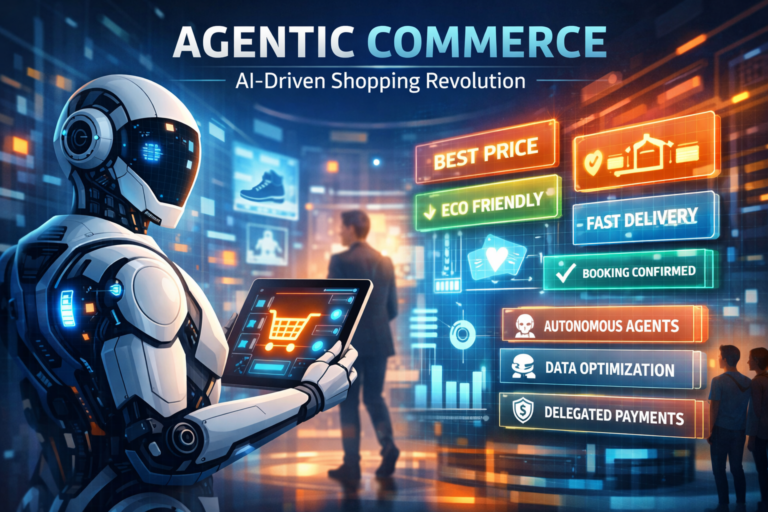
Between October 2025 and March 2026, PayPal assembled what is arguably the most comprehensive AI-commerce integration suite of any incumbent payments player:
- OpenAI / ChatGPT: PayPal wallet embedded in ChatGPT’s Instant Checkout via the Agentic Commerce Protocol. Users go from product discovery to purchase without leaving the conversation.
- Google / Gemini: PayPal endorsing and co-developing Google’s Universal Commerce Protocol (UCP), appearing as a native payment option in Google Search and Gemini AI experiences.
- Microsoft Copilot: PayPal wallet, BNPL, and crypto options available inside Copilot’s shopping flow.
- Perplexity: PayPal-powered checkout already live inside the AI search platform.
- Cymbio acquisition: A Tel Aviv-based e-commerce AI catalog tech company acquired to fuel “Store Sync” — making merchant product data natively discoverable inside AI channels.
The logic is not complicated. If AI agents become the dominant discovery and purchase surface — even for 20% of digital commerce over the next 3–5 years — the payment layer embedded inside those agents wins by default. And PayPal, uniquely, has both the consumer trust identity and the merchant relationship simultaneously.
Unlike Visa or Mastercard (rails, no wallet), or Stripe (developer-first, no consumer brand), PayPal holds both sides of the transaction trust equation. In an agentic world, that dual credentialing is structurally valuable.
The product packaging is also smart: Agent Ready unlocks existing PayPal merchants for AI surfaces with zero additional technical integration. Store Sync makes their catalogs discoverable in one step across multiple AI platforms. One-to-many logic — the merchant integrates once, reaches everywhere.
This is the right strategic direction. The open question is speed and European deployment timeline.
2. Deepening European Infrastructure Without Fighting Alone
PayPal has historically tried to win Europe by replicating its US model. That era is over.
The new approach is more collaborative and more intelligent:
The JP Morgan partnership is the most significant structural move. PayPal is now expanding merchant acquiring in the UK and Europe through JP Morgan’s Commerce Platform, while JP Morgan offers Fastlane to its European merchant clients. PayPal gets distribution and reach without carrying the full acquiring infrastructure cost. This is a capital-light, brand-forward model — consistent with a company that wants to be a checkout layer, not a bank.
The Klearly investment ($14M Series A, Amsterdam) bets on hardware-free POS in European retail. Klearly processes nearly $1B annualized volume with a 40-person team, integrated into existing merchant systems in the Netherlands, Italy, and Belgium. For PayPal, this is an options play on physical commerce — not yet a commitment, but the right signal to be sending as European merchants increasingly resist terminal hardware lock-in.
Mollie partnership for marketplace payments across the EU and UK extends PayPal’s reach into the merchant-seller marketplace flows that represent some of the fastest-growing transaction volumes in European e-commerce.
PayPal Ads expanding to Germany and the UK brings its commerce media product — built on transaction graph data — to European markets for the first time. The Transaction Graph Insights product unveiled at CES 2026 is potentially differentiated: cross-merchant behavioral data that no pure-play advertiser has.
What emerges is a three-layer European strategy:
- Defend branded checkout through friction reduction, Fastlane, and conversion optimization
- Expand into offline commerce selectively through software-based partners
- Deepen merchant distribution through PSPs, banks, and commerce media — staying embedded without always being the front end
3. France: A Relevance Preservation Play
France is where PayPal’s European strategy is most instructive — precisely because the competitive dynamics are most advanced.
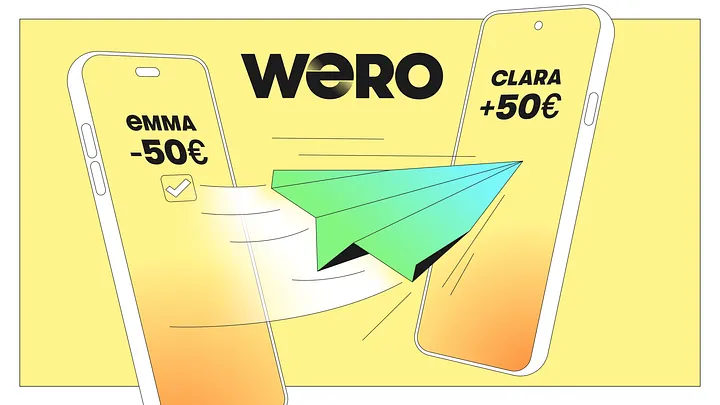
Wero is real. The EPI-backed wallet is live, growing, and already winning the P2P narrative in France. French consumers in 2026 increasingly see Wero as the native, free, and faster alternative to PayPal for sending money to friends. That matters because P2P was always a retention mechanism — it kept users habitually opening the PayPal app. Losing that habit is not immediately fatal, but it weakens the wallet flywheel.
French merchants still need PayPal — not out of love, but out of conversion math. Adding the PayPal button can lift checkout conversion by 10–20% because millions of French consumers still default to it, particularly for purchases on unfamiliar sites. At fees of 1.20%–2.90% + €0.35 per transaction (materially above Stripe’s ~1.5% + €0.25), merchants absorb the cost because the alternative is losing the sale.
But that trust premium is price-dependent and generational. Developer-first merchants building new stacks today are choosing Stripe or Adyen by default. The PayPal button is increasingly a legacy integration that stays in the checkout mix rather than being the first choice.
PayPal’s unambiguous fortress in France is cross-border e-commerce. French consumers buying from US, UK, or Asian sites overwhelmingly use PayPal. It removes currency risk, fraud anxiety, and returns complexity in a single click. Wero cannot replicate this for years — it has no merchant network outside Europe.
My read on France: PayPal is not fighting for checkout domination here. It is preserving relevance inside multi-rail commerce — staying present in marketplaces, maintaining its cross-border moat, using BNPL and merchant infrastructure rather than a consumer launch campaign. Defensive-plus-selective, not aggressive.
That is a rational strategy for a fragmented market shaped by Cartes Bancaires and strong local banking relationships. The JP Morgan / Cartes Bancaires angle — JP Morgan became the first US bank admitted as a CB principal member — suggests PayPal is accessing French payment flows through banking infrastructure rather than around it. Smart adaptation.
What’s Missing From the Strategy
Candor requires acknowledging the gaps.
Execution speed is the stated problem, and it shows. The AI commerce integrations are largely US-first in their current rollout. European users of ChatGPT or Copilot cannot yet experience the same “chat to checkout with PayPal” flow as US users. GDPR complexity, PSD2/3 constraints, and fragmented local regulation will slow European deployment. The window for PayPal to establish AI-commerce dominance in Europe before local alternatives fill the slot is real — but it is not unlimited.
The physical commerce bet is underpowered. A €14M minority stake in a 40-person startup is not a serious European in-store strategy. If PayPal genuinely wants to compete with Adyen or Worldline in physical European commerce, it needs either a bolder M&A move or a direct acquiring capability. The Klearly investment is a signal, not a strategy.
The P2P erosion in Europe has no visible answer. Against Wero, which benefits from bank distribution and a European sovereignty narrative, PayPal’s only durable response is differentiation through protection (buyer/seller guarantees) and cross-border utility. That may be enough to maintain relevance, but it will not recover lost ground.
What This Means for Merchants and Payment Professionals
If you are building or advising on a payment stack in Europe, here is the practical read:
For e-commerce merchants: Keep PayPal in your checkout mix. The conversion argument is still valid, especially for cross-border flows and mid-to-senior consumer demographics. But stop treating it as your primary checkout investment — optimize it, monitor its contribution, and diversify toward Fastlane and wallet tokens as those roll out in your market.
For PSPs and payment infrastructure players: PayPal is increasingly a partner, not purely a competitor. The JP Morgan and Mollie approaches suggest PayPal wants to embed through existing distribution rather than build its own. That is an opportunity for commercial dialogue.
For payment strategists watching AI commerce: The OpenAI/Google/Microsoft suite is the most important payment news of Q4 2025–Q1 2026. If even 15% of e-commerce discovery shifts to AI agents by 2028, the companies embedded in those flows at the payment layer will capture disproportionate value. PayPal is positioned for this. The risk is European deployment lag.
Final Thought
PayPal in 2026 is a company at a genuine inflection point — not in decline, but mid-transformation, with the strategic direction right and the execution under intense pressure.
The AI commerce pivot is bold, coherent, and structurally sound. The European infrastructure partnerships are intelligent adaptations to a fragmented market. The appointment of a transformation-experienced CEO signals the board knows the problem is delivery, not vision.
But strategy without execution is just a presentation. And in payments, the window to establish a position rarely stays open long.
The next 18 months will determine whether PayPal becomes the trusted infrastructure layer of AI commerce in Europe — or whether it becomes a good checkout button that lost the future to faster movers.
I’d watch Wero’s move into AI surfaces, the pace of Fastlane’s European rollout, and whether Enrique Lores brings the execution discipline his HP track record suggests he can.


 ITOPYX